HoloFlect
Modular Design
HoloFlect Molecules, the architecture behind every build, in which Elements such as the Compute Cluster, Sensor Riser and Optical Bracket attach through shared, mostly magnetic interfaces and combine into Compounds for the lab, for play or for the field.

The idea behind HoloFlect was to treat a headset the way people treat a workstation. Nobody throws out a desktop because a better graphics card came out. Enterprise customers in particular need to run a fleet of devices for years, repair them with spare parts rather than by shipping them back to the manufacturer, and fit them to jobs nobody has defined yet. Sealed, all-in-one headsets can't do that. They can't be upgraded, customized, expanded or maintained, and every refresh means replacing the whole device.
So we built HoloFlect from interchangeable parts, and gave the scheme a name: Molecules.
Elements
A HoloFlect Element is one component: a sensor package, a human-interface bracket, a display module, a compute solution. The platform itself is everything that lets those parts attach and work as a unit: the connection interfaces, the mounting hardware and the software layer that makes them interoperable. Three Elements carry most of the design.
- Compute Cluster. The main source of compute on the device. It hosts the HoloFlect operating system, the interface layer and onboard storage. It's mostly a single-board computer, with ports for sensors, input devices, neural compute add-ons and outputs such as speakers, displays and haptics.
- Sensor Riser. It carries the forward-looking sensor array: cameras, SLAM devices, microphones, lidar or other spatial sensing. It can also take magnetic, electromagnetic and inertial sensors, and environmental ones for humidity, air quality, vapors and temperature. The riser is the hub that passes their data to the Compute Cluster.
- Optical Bracket. A common mount and cabling path for the display, so the optics can change as display technology does, whether that means a different field of view, a ruggedized build, or a monocular or stereo display. It can attach directly to the Sensor Riser, or sit apart from it, as it does on a tactical helmet.

Compounds
A HoloFlect Compound is a particular set of Elements, with the assembly guidelines and packaging that turn them into one device. A Compound might be a headset, a helmet, a pair of goggles or a rugged handheld viewer. Three examples show the range.
- Laboratory. A head strap, a wide-angle reflective transparent display, a magnetic face shield, low-power compute and a minimal Sensor Riser. It's for monitoring equipment and readings, with little need for spatial sensing.
- Gameplay. A padded, adjustable headband, the same wide-angle reflective display, high-power compute with a strong GPU, an integrated SLAM solution, high-fidelity audio and a handheld controller.
- Tactical. Built on a tactical helmet, with the Optical Bracket on the NVG mount and the Sensor Riser on the ARC rails. See Tactical.
The tablet variant is a Compound too: the same sensing and compute, held in the hands instead of worn.
Magnets and mating surfaces
Every variant shares a standard structure, so a new configuration is mostly a matter of choosing parts. Components meet on standardized mating surfaces and attach magnetically wherever they can. Recesses printed into the parts take the magnets. The lens assembly is held together by magnets recessed into its parts, so it goes together solidly without fiddly clasps, and in the finished parts the magnets are encapsulated invisibly inside the visor components.

Modularity paid off twice. It sped up our own iteration, because a new idea needed a new part rather than a new headset. And it kept pointing at product direction: each time a part was easy to swap, we learned which choices customers would want to make for themselves.
From CAD to print
Everything was modeled in Cinema 4D and printed in-house. The halo frame of Pro v2 went through more than twenty revisions, and was split into sections that fit the printer and stood on supports while they printed. Later builds broke the design into smaller parts with their own version histories: camera mounts, visor mounts in several hole patterns, spacer brackets, a display cradle and baseplate, and the Compute Cluster enclosure. Large curved parts were printed in white or black PLA. Clear parts and lenses moved to resin, as described on Optics and Displays.
Gallery

Pro v2, with the printed parts split by color. The same parts from above. 
The halo frame alone: the part everything else attaches to. 
Preparing a halo section for printing. Printing halo sections on supports. 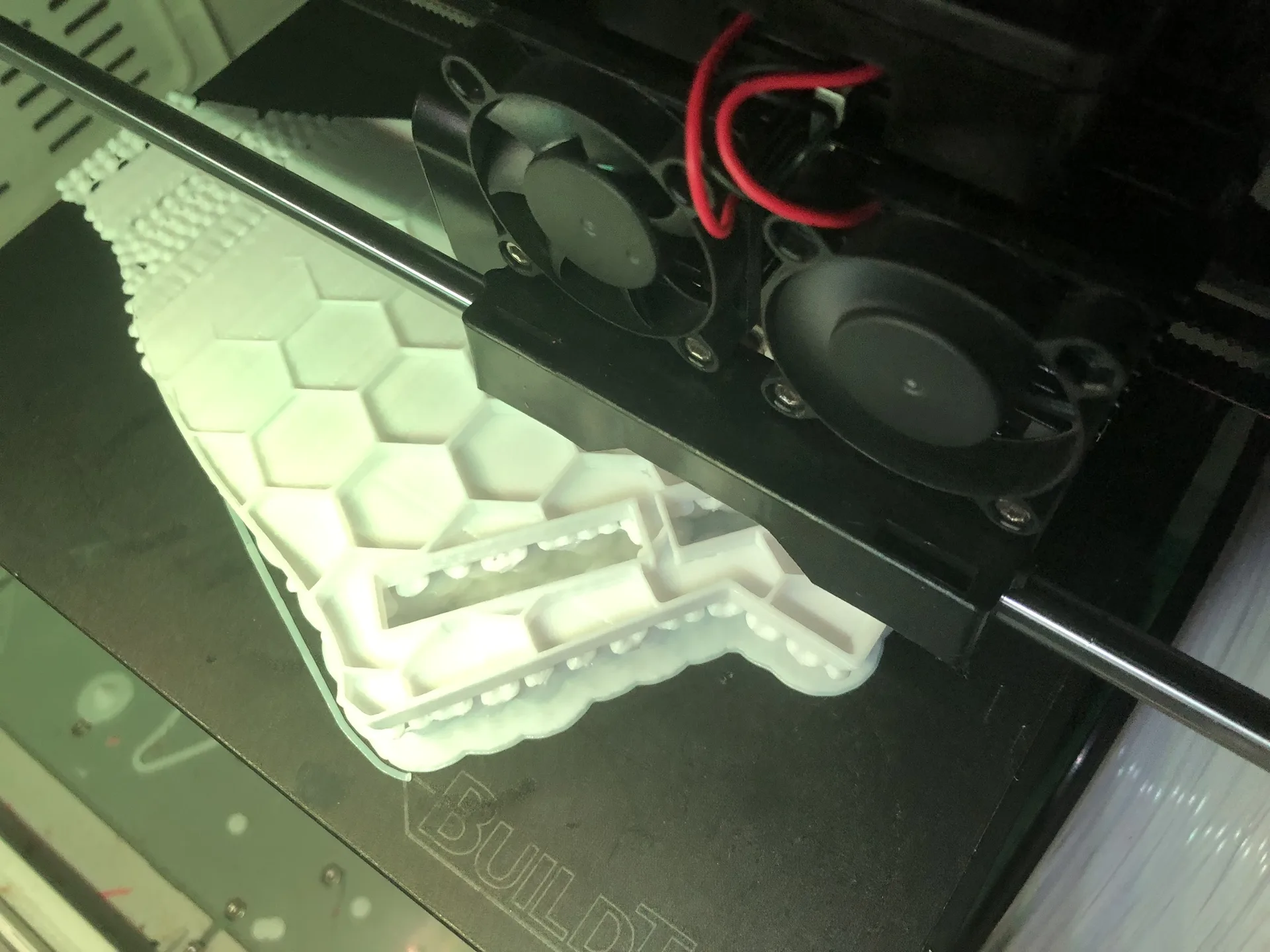
A large printed part with a honeycomb pattern on its face. 
Printed parts from two builds side by side. 
A black halo frame, stripped down. 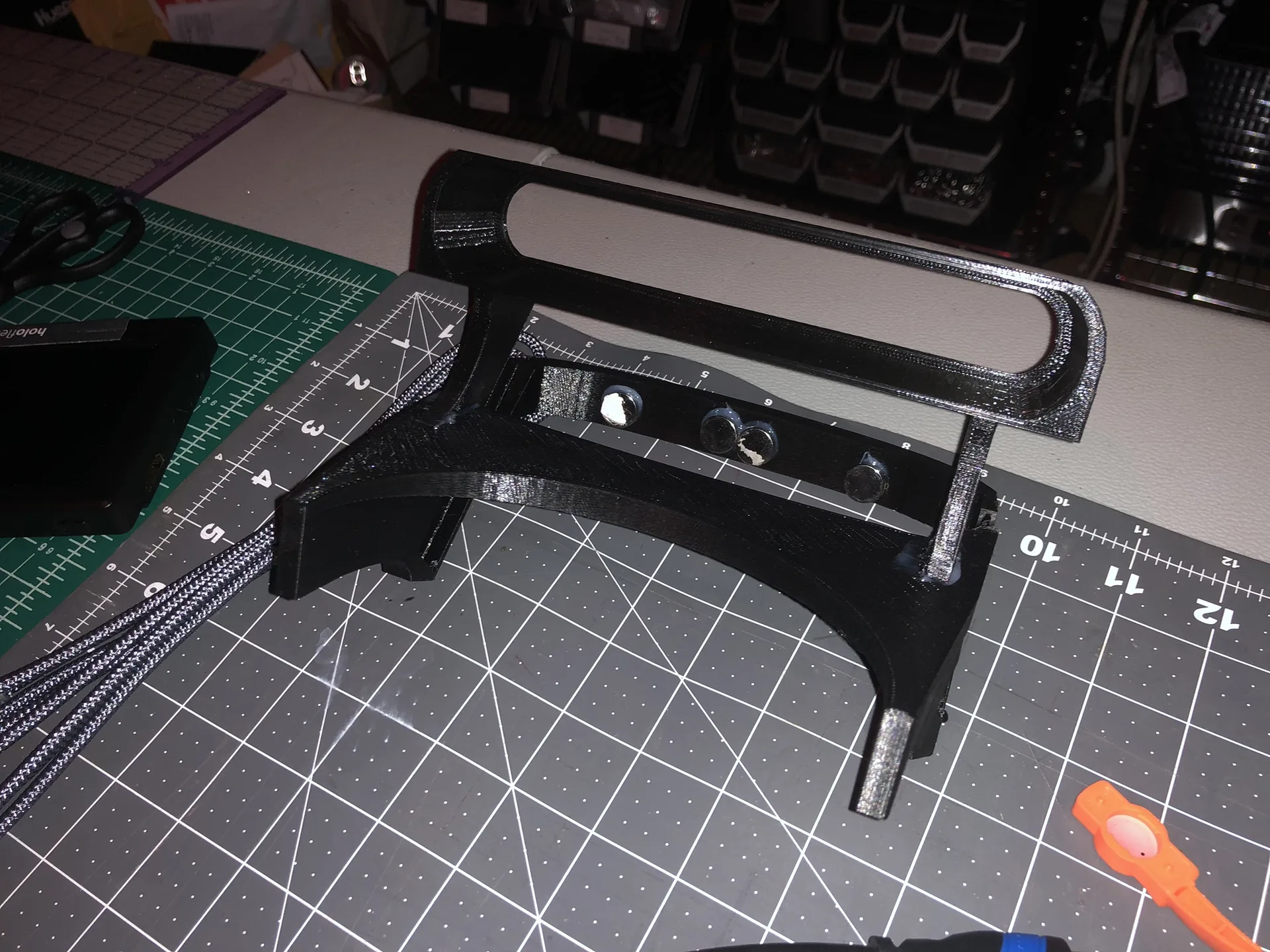
A black Sensor Riser. A white Sensor Riser, with vents for the electronics inside. 
The Sensor Riser with a depth camera. 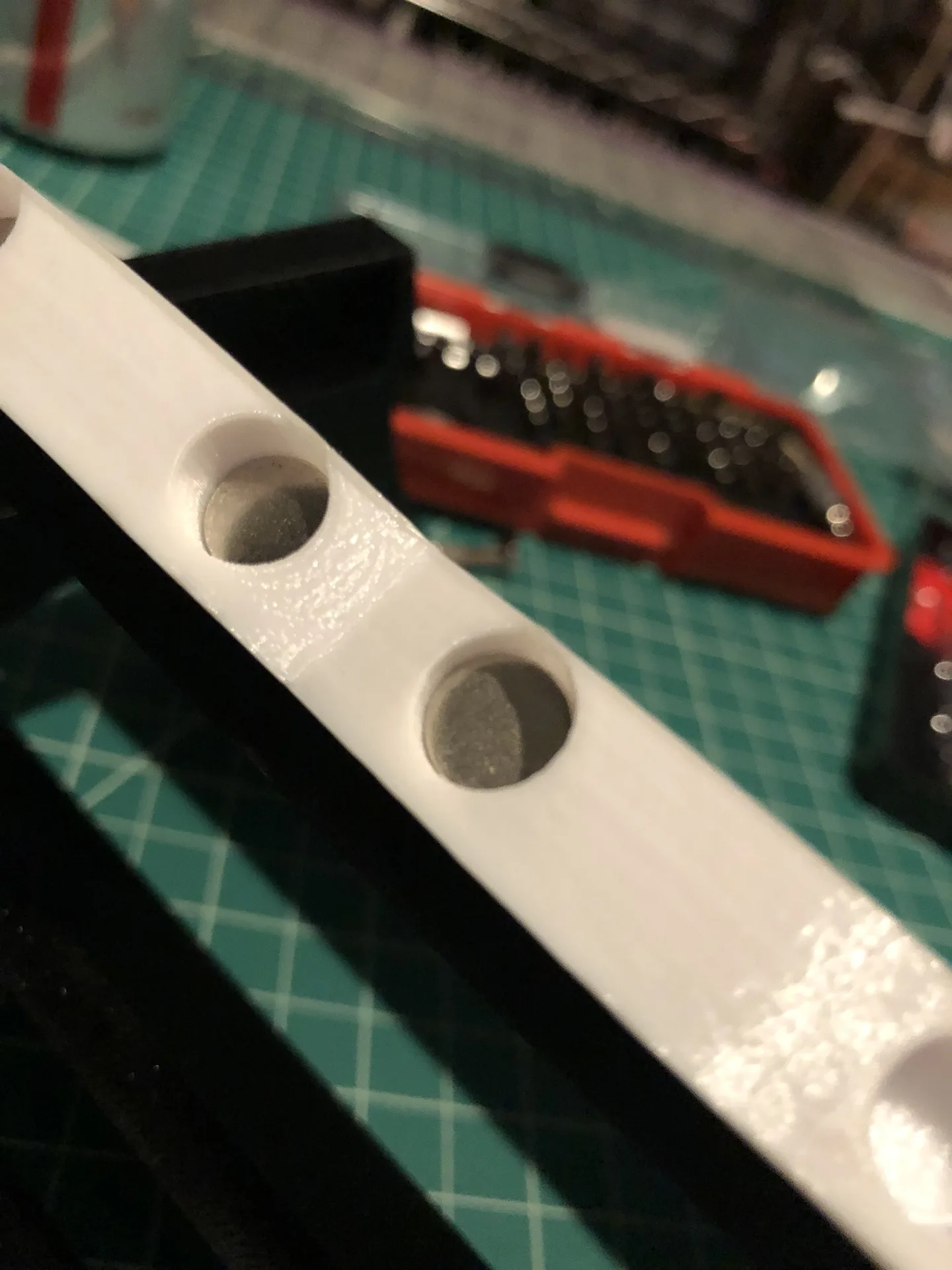
Recesses for magnets in a visor bracket. Magnets seated in the bracket. 
Fitting a tinted visor to its bracket. 
The visor and its bracket, assembled. 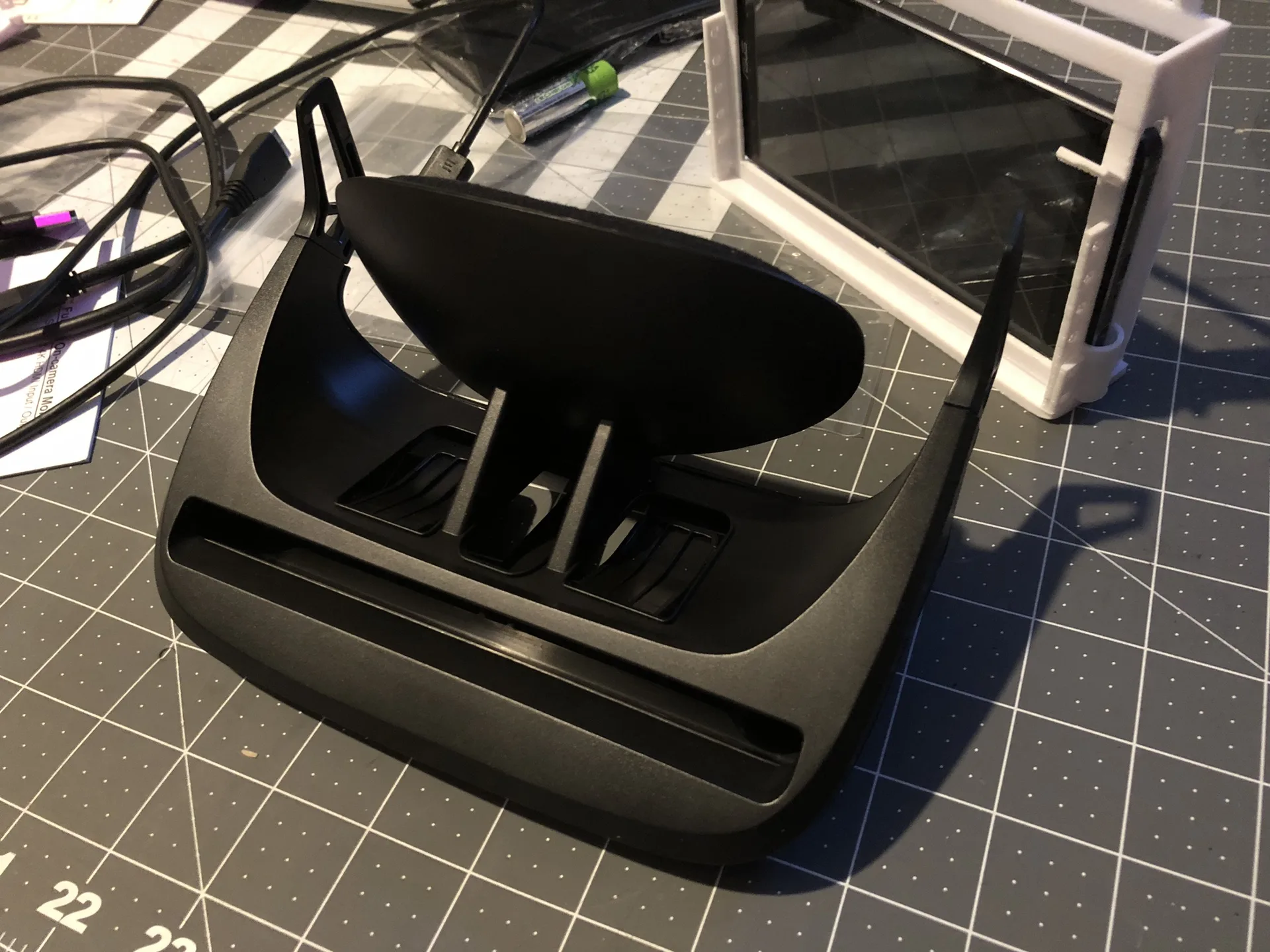
The forehead rest, without the enclosure. 
The forehead rest from above. 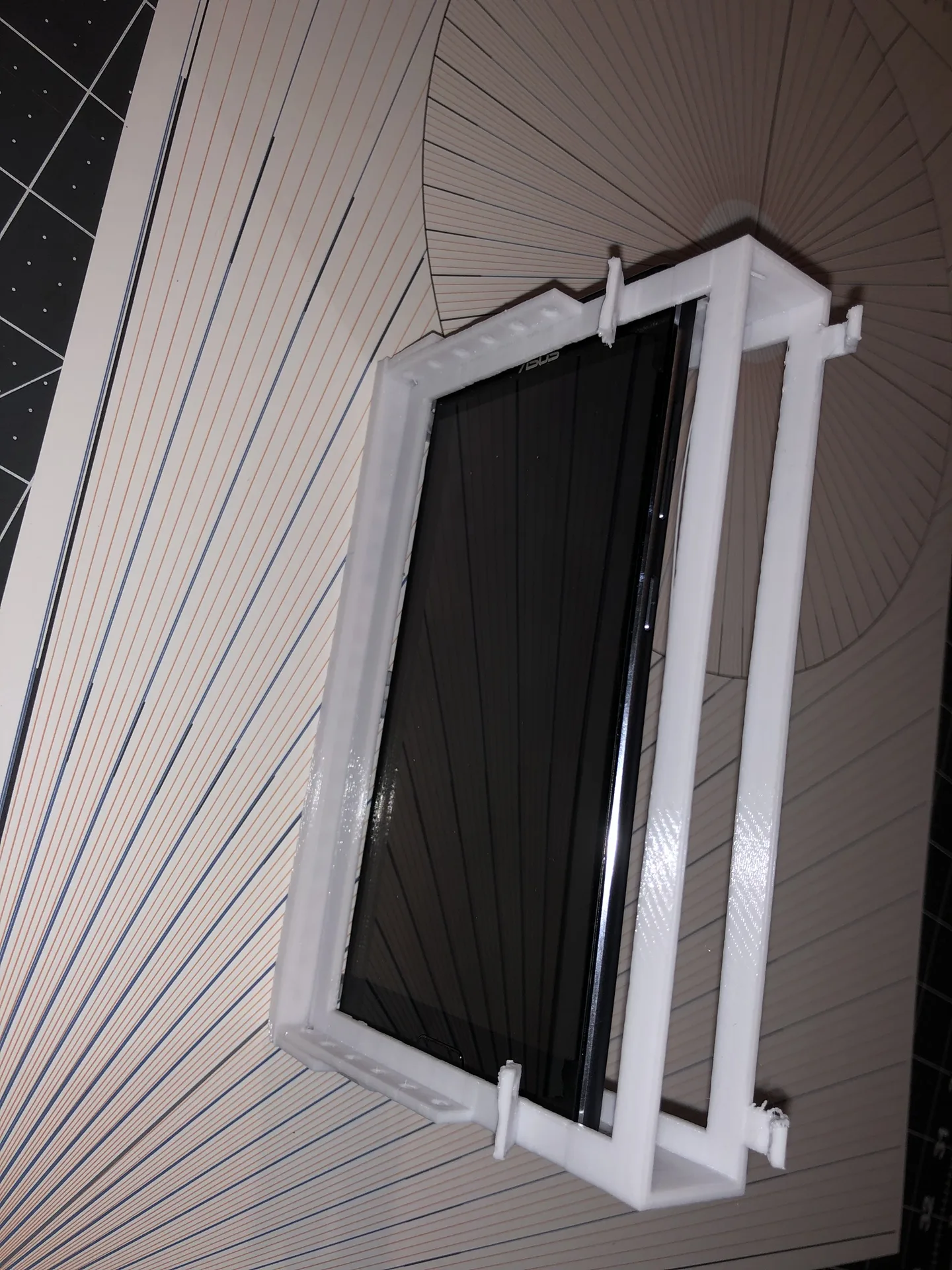
A display held in a printed Optical Bracket frame. 
Elements laid out for assembly.
Related work
-

Phone-Based AR Headset
The first HoloFlect prototype, built from a phone and a hand tracker.
-
AquariOS
One platform for AR and VR apps, running several at once, on whatever headset or phone you have.
-
xR Ecosystem
A modular, device-agnostic programming interface for mixed reality.
-
The Blue Vale
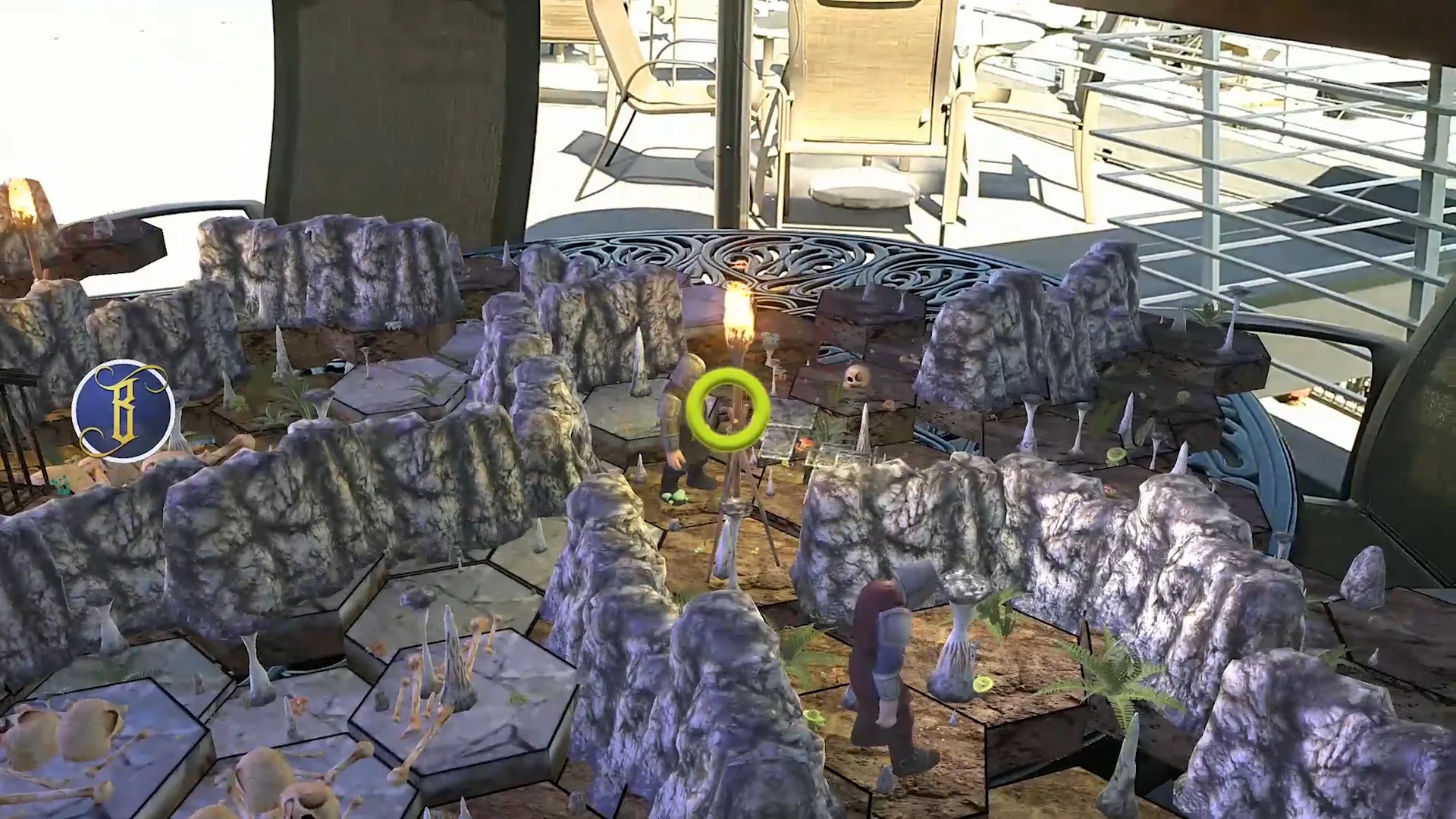
A d20-style tabletop roleplaying game played in augmented reality, on almost any device.