MRiot Vision Pro Module
Friendly hardware and software that give entertainment an understanding of people.
 Eddie OffermannFull-stack hardware prototyper and xR software architect
- Role
- Full-stack hardware prototyper and xR software architect
- Areas
- Computer Vision, Hardware, XR, Tools, AI

MRiot set out to explore the space between humans and machines: interacting without touching. It's friendly hardware and software working together to bring intelligence to entertainment, built on an understanding of context and movement.
What it does
- Extends "dumb" software with intelligent computer vision. Existing experiences can respond to bodies, hands and gestures without being rewritten around a sensor.
- Makes custom computer vision applications simple to build. Experiences can trigger things and sequences from what people do in the space.
- Lets your body control the world. Wave hello, move the world without touching a thing.
The guiding line: if you've got a human, you're halfway there.
The Vision Pro Module
The Vision Pro Module is MRiot's sensing hardware. It builds on leading depth sensors and neural compute hardware so recognition runs at the edge, next to the experience it drives.
We designed it to look like something you'd want in a room rather than a bare dev kit. An off-the-shelf depth sensor slips into a matte black, 3D-printed shell. A rounded bezel frames the color camera and the depth windows, and the body behind it is covered in a grid of small perforations. The module sits on a flat mounting plate with a hinge and a knob on each side, so it can be tilted to face the space it watches, and the lowercase mriot logo is molded into the base. The compute side gets a matching perforated shell with cutouts for its ports.
Under the hood
A user's own device pairs with an MRiot Concierge, which hands the device the controls it needs. From there a device control loop keeps the two in sync. Shared identity data structures and a set of standard control interface types let any paired device drive any experience the Concierge knows about.
MRiot also explored AR interfaces for the devices around you: see MRiot: Appliance Control. It shares its roots with HoloFlect and our xR ecosystem research: sensors that talk to each other, compute that can be distributed, and development that doesn't start from scratch for every device.
Gallery
The module, rendered on a turntable. 
From the front: the camera and sensor windows behind a single bezel. 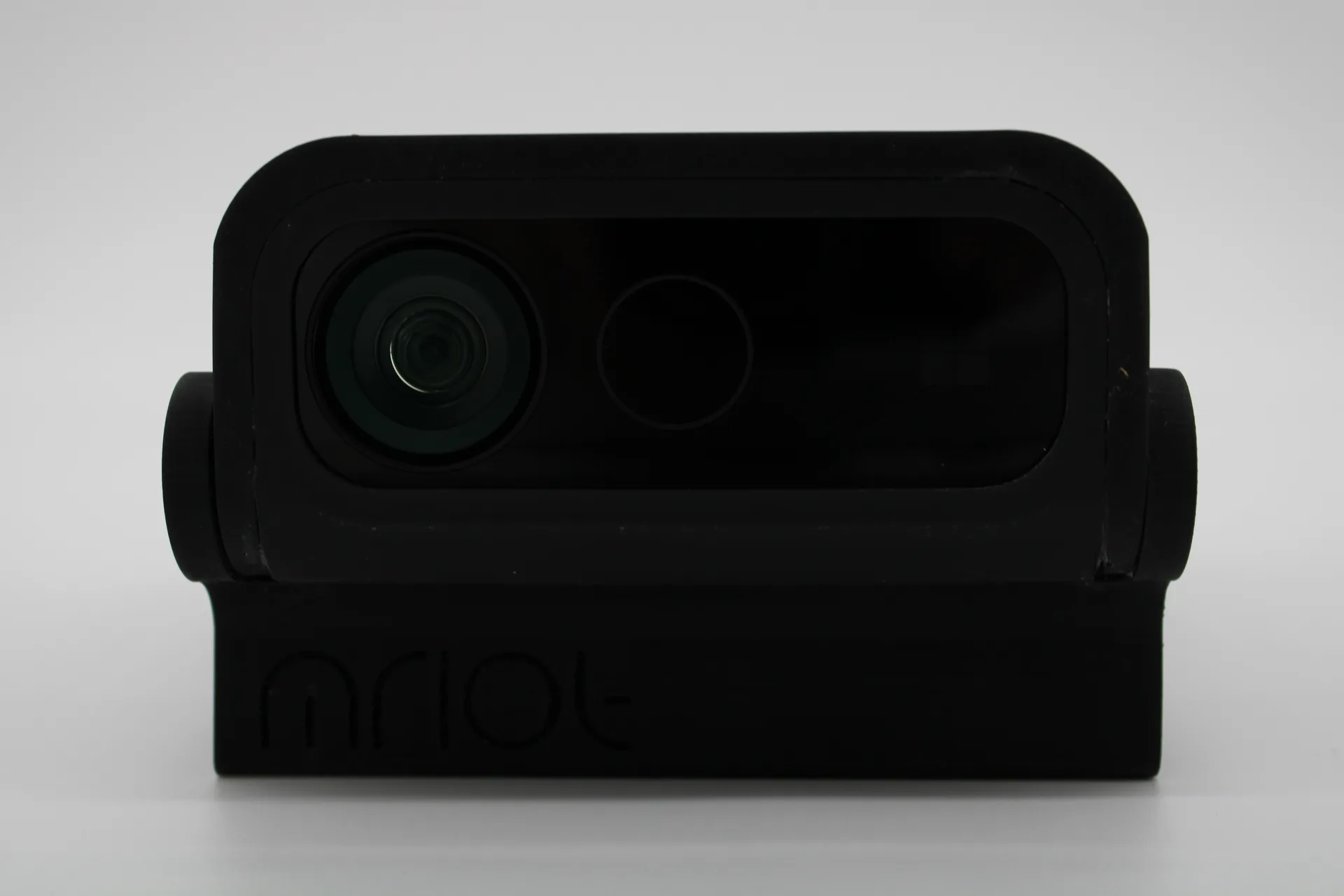
The mriot logo is molded into the base. 
A side hinge lets the module tilt on its plate. 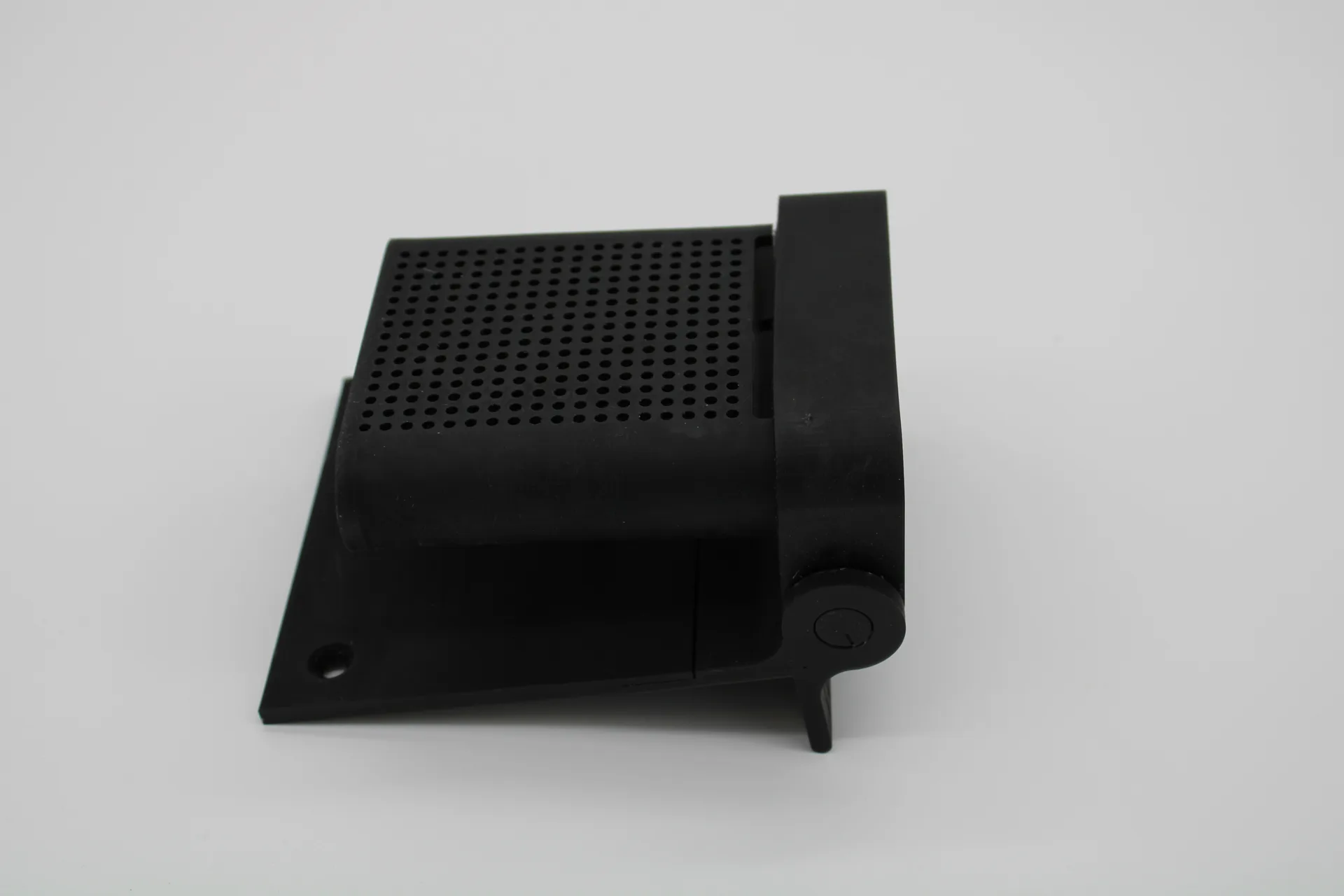
The module on its flat mounting plate. 
The perforated housing from behind. 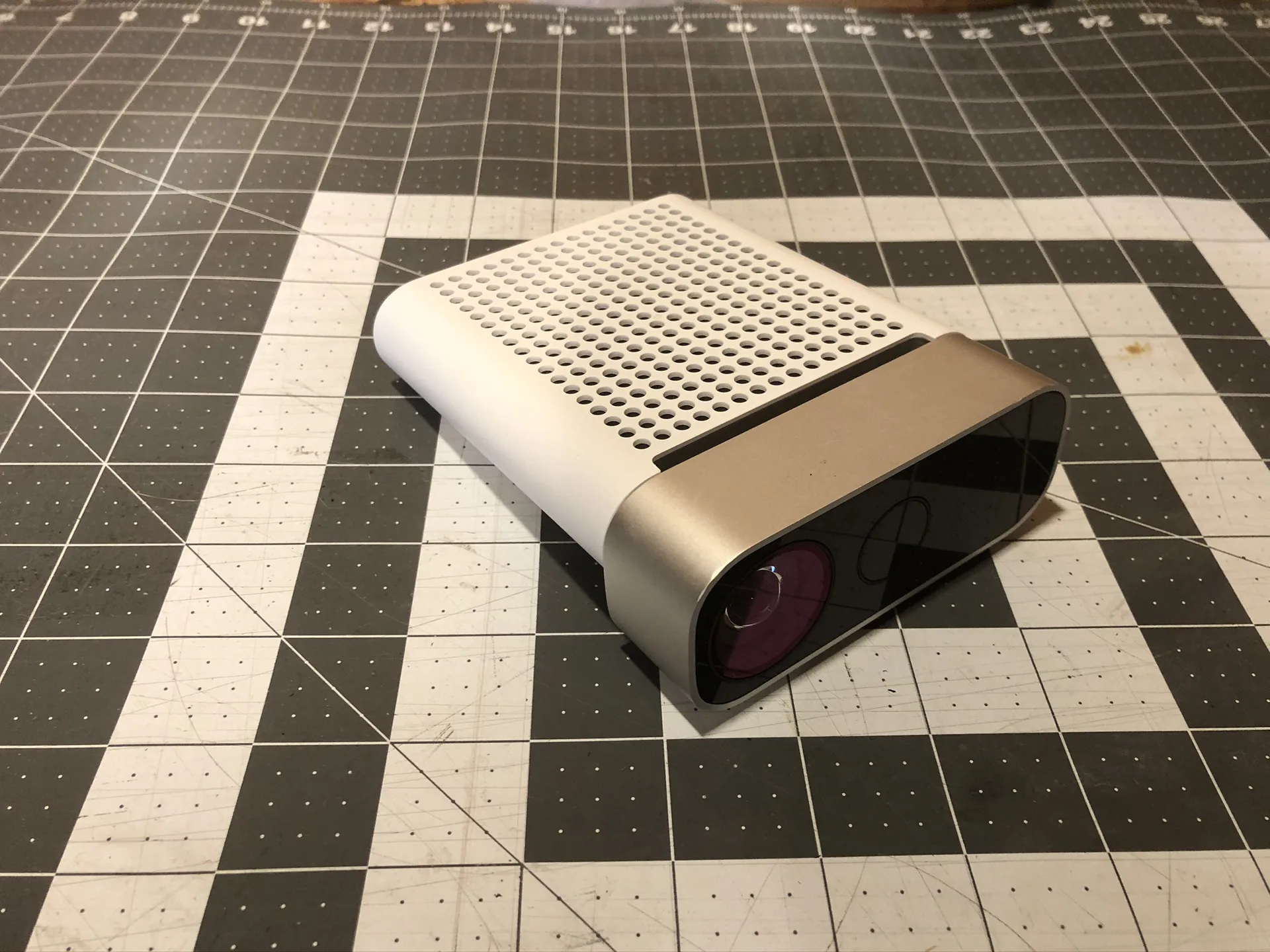
The off-the-shelf depth sensor before it goes into the shell. 
A printed shell for the compute side, with openings for its ports. 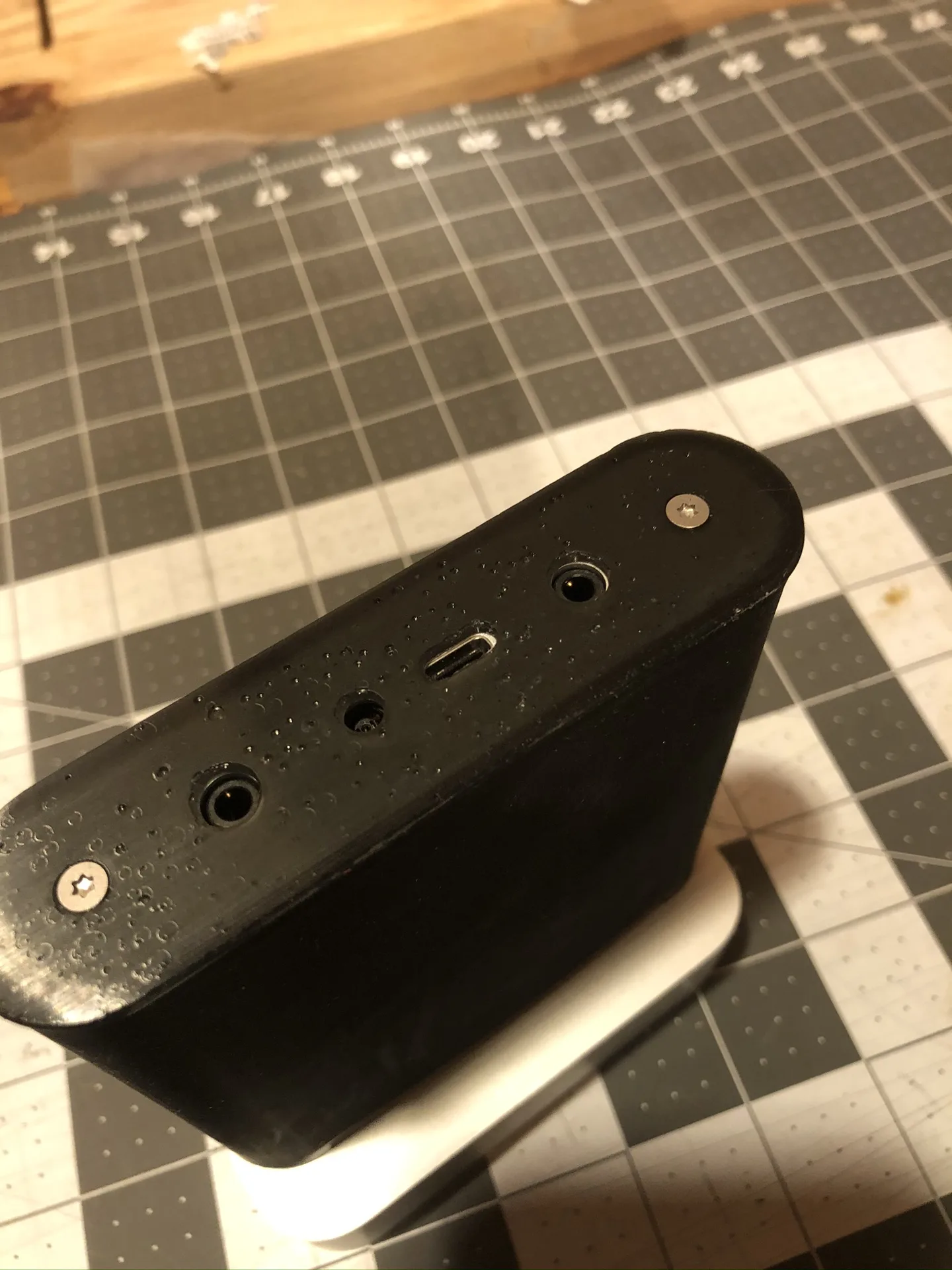
Port cutouts in the printed shell. 
The front bezel, printed separately. 
An assembled prototype on the bench.
Related work
-

HoloFlect
A modular, upgradeable AR headset platform built for enterprise.
-
CameraSmartPlate
A camera plate that knows where it is, for tracking, virtual production and NeRF capture.
-
Cardforia and SecureVR
Unity building blocks for phone-based AR and VR.
-

Computational Optics
Hyperspectral images from the ordinary camera in a phone.